
di Valerio Bernardi


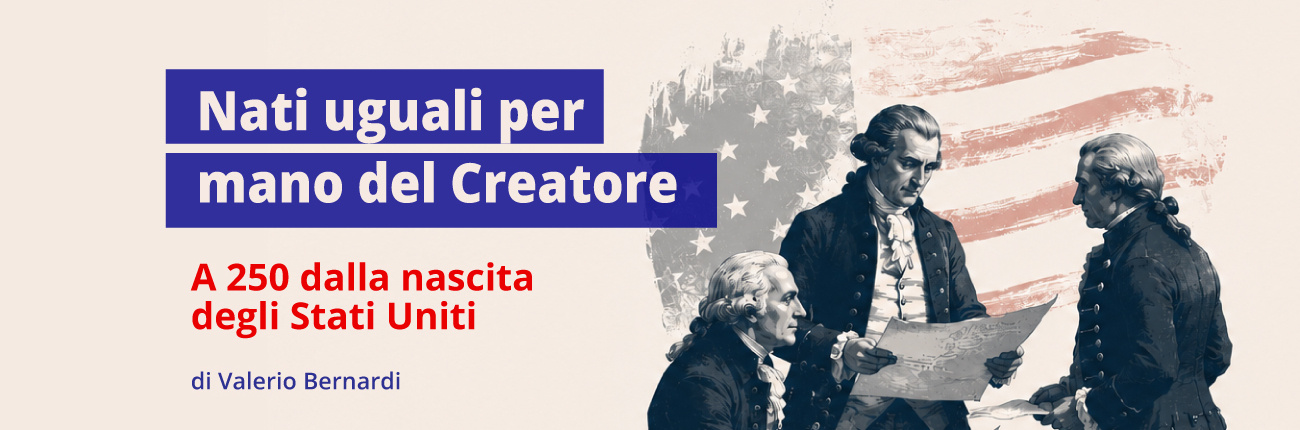
Gli Stati Uniti d’America oggi festeggeranno (con importanti manifestazioni) il duecentocinquantesimo anniversario della Dichiarazione di Indipendenza. Si tratta di una celebrazione importante per la storia mondiale, perché, nel bene e nel male, gli USA sono stati, sino ad ora, la nazione che ha avuto una sorta di predominanza all’interno del mondo (almeno da dopo il 1945) e che, tornando alle sue origini, ha sancito la nascita del moderno stato liberal-democratico. 

Quello che ci possiamo chiedere da evangelici, rispetto a questo avvenimento, è quanto di quello che è successo nella storia degli USA sia legato anche a fattori di tipo religioso e quanto il protestantesimo (in tutte le sue componenti) sia stato determinante per la formazione di uno stato che è diventato un modello sociopolitico anche per altri Stati.  

La risposta che possiamo dare è che l’apporto del mondo evangelico è stato importante, ma non nella dimensione che si vuole dare oggi. Ritengo che il protestantesimo abbia dato un contributo fondamentale alla formazione dello stato liberal-democratico, soprattutto grazie a tre principi che sono in parte presenti nella Dichiarazione di indipendenza e che, in parte, sono impliciti nel patto costituzionale che ogni cittadino americano accetta quando nasce suol suolo degli Stati Uniti. Gli estensori della Costituzione e della Dichiarazione di Indipendenza sono testi scritti da credenti anche se non sempre ortodossi e influenzati anche dalle correnti illuministiche e deiste, non sempre in linea con il pensiero evangelico. Le caratteristiche evangeliche sono diverse.  

La prima riguarda le decisioni politiche sono prese dal popolo. L’idea viene fuori per la prima volta nel cosiddetto Compact del Mayflower. Quando i cosiddetti Padri Pellegrini (che erano dei protestanti calvinisti) approdarono a Cape Cod, sapendo che il governo inglese era lontano e che la Corona difficilmente avrebbe potuto agire con rapidità, decisero che si potevano autogovernare, in quanto uomini creati da Dio perché, come afferma il Vangelo, sopra Dio non c’è nessuno. Con questa affermazione hanno di fatto iniziato a concepire una nuova forma di governo che ha preso definitivamente forma dopo più di cento anni da quel momento. L’assemblearismo dei Padri Pellegrini, proveniente da un calvinismo radicale, ha quindi dato un grande contributo alla formazione del Nuovo Stato. Accanto a ciò il puritanesimo (estraneo alla mentalità italiana) comprendeva che bisognava ringraziare Dio per tutto ciò che si riceveva e dava l’idea a quegli uomini sbarcati a Cape Cod che, forse, Dio li aveva destinati ad uno scopo preciso e per questo lo ringraziavano di continuo. L’eccezionalità americana nasce proprio lì e l’idea di essere una nazione benedetta da Dio non ha mai lasciato la mentalità americana.  

Un altro contributo fondamentale, a nostro parere, è quello dato dal battismo puritano che ha fatto sì che i Padri fondatori degli Stati, provenienti da un ambiente multiforme, riconoscessero che ci dovesse essere una separazione netta tra gli affari dello Stato e quelli delle chiese o comunità di credenti di qualunque tempo essi siano (Williams comprendeva anche i nativi americani). Il primo emendamento della Costituzione americana che ha permesso la nascita del primo stato in cui non ci fosse un gruppo religioso dominante è figlio di un altro pastore e politico: Roger Williams. Il fondatore della colonia del Rhode Island (nato proprio per il dissenso nei confronti dei calvinisti più stretti), è stato il propugnatore della libertà di culto e della separazione tra gli affari dello Stato e quelli delle Chiese. Come ha recentemente ricordato Miroslav Volf, Williams è un esempio di come un credente possa lavorare per il bene comune ed il fiorire della società, pur sapendo di vivere in un mondo plurale. Il melting pot americano che ha assorbito le tradizioni differenti e le ha trasformato in un patto costituzionale che dura, praticamente immutato, da 250 anni, è anche una delle ricchezze degli Stati Uniti. Pur essendoci una prevalenza culturale del mondo bianco, anglosassone e protestante (riassunto nell’acronimo WASP) gli Stati Uniti sono stati la prima compagine statale a non essere al servizio di una religione o a volerla controllare. Questo è una questione importante che in un mondo sempre più polarizzato va sempre sostenuto. 

Gli Stati Uniti sono stati sempre una terra delle opportunità dove tutti hanno libertà. Queste idee sono state portate avanti invece dall’altra componente del protestantesimo evangelico americano: quello di tipo arminiano. Le Chiese di Cristo hanno visto il loro fondatore, Alecander Campbell, che viveva nei primi decenni della fondazione dello Stato, un difensore della libertà umana e della libera scelta che gli uomini possono fare, sempre sotto la volontà del Divino Artefice. Questo concetto venne ribadito in un famoso dibattito con il socialista umanista Robert Owen che, invece, sosteneva che gli uomini erano condizionati dal loro status naturale. La libertà, invece, ben ribadita tra i diritti inalienabili presentati nella Dichiarazione di Indipendenza, rimane uno dei punti cardine della cosiddetta american way of life.  

Il contributo dei credenti ha permesso la nascita di un mondo perfetto negli USA? Assolutamente no. Gli USA non coincidono con l’attuazione della predicazione del Vangelo.  Gli stessi Padri Pellegrini, Roger Williams e gli altri padri del protestantesimo americano ne erano ben consci. Lo stesso Stato nato nel 1776 aveva già al suo interno alcuni problemi che si sono poi trascinati negli anni, come quello della schiavitù, quello dell’uguaglianza formale e delle disuguaglianze sostanziali, quello di una violenza interna tra gli individui mai sopita ed una tendenza al bellicismo. Qualsiasi Stato, benché benedetto da Dio (come tante altre nazioni) rimane un’assemblea di peccatori (perdonati o no) con il loro intelletto e con i loro difetti. 

Noi evangelici europei, quindi, dobbiamo apprezzare i contributi che gli Stati Uniti hanno dato al mondo ed alla struttura degli stati futuri (molte costituzioni europee sono state scritte guardando a quella americana), ma, proprio come i Padri Pellegrini, come Roger Williams ed altri, sappiamo che lo Stato non è neanche un dio in terra (tutti avevano seri dubbi sulla concezione hobbesiana dello Stato e non è un caso che il modello della Costituzione sia stata presa da pensatori come Locke o gli esponenti del common sense scozzese o gli illuministi francesi), ma è un luogo (una città come avrebbe detto Agostino) dove si deve cercare di vivere al meglio e dove apprezziamo che ci possa essere un’autentica e genuina testimonianza di fede. Siamo contenti che uno Stato fondato su alcuni principi anche evangelici abbia avuto una vita piuttosto lunga per le moderne istituzioni, ma, allo stesso tempo sappiamo che Dio è presente nella storia non in un particolare Stato, ma nel cuore degli uomini che cercano giustizia e perseguono il bene di tutta la comunità. Se questi valori continuano ad essere presenti allora noi possiamo chiedere la benedizione di Dio sulla nostra nazione come su tutte le altre nazioni e festeggiare la nascita di uno Stato, la cui costituzione ha sicuramente cambiato il mondo ed in cui alcuni credenti si sono impegnati al meglio, pur nei loro limiti umani. 


  Valerio Bernardi – DIRS GBU 

L’articolo Nati uguali per mano del Creatore. A 250 dalla nascita degli Stati Uniti. proviene da DiRS GBU.

source https://dirs.gbu.it/nati-uguali-per-mano-del-creatore-a-250-dalla-nascita-degli-stati-uniti/

The theme of this year’s conference (December 5–8) presents us with a major challenge that goes beyond the “relationship” between Evangelicals and Catholics. This challenge has many facets: it is relational (involving one’s neighbor or coworker); it relates to the devotion of social communities (parishes, neighborhoods, patron saints, etc.); it is social and cultural, as it reflects the constant intervention of the authorities of the Church of Rome (first and foremost the Pope), who give the impression of being a “Big Brother” constantly commenting on historical events and current affairs at every level. This “Big Brother” speaks from a vantage point with a millennia-old legacy that seems unshaken and unaffected by scandals or secularization: it speaks, makes pronouncements, and is called upon to intervene in the most diverse dynamics of the contemporary world (see, most recently, the encyclical on artificial intelligence).

Taking up this challenge—and this is the point of this reflection—is an integral part of the witness that the disciples of Jesus Christ intend to bear to the Gospel of Jesus Christ.
The “witness” to Jesus Christ is a motivation that goes beyond the reasons most commonly cited to justify an interest in Catholicism.

It goes beyond evangelism, which is the most commonly cited reason. Catholicism is a context in which we would find the figure of the baptized but not that of the born-again. Expressed in this way—as one of the ultimate reasons for the interest and energy devoted to the study of Catholicism—it would make any interpersonal interaction with people of the Catholic faith problematic. It would turn “living alongside” into a sort of permanent evangelism campaign.

Perhaps it is here—in this emphasis placed on the evangelistic aspect—that we find the reason for a series of practices often adopted by evangelicals, which result in “not participating” and in distancing themselves from a series of liturgical rites that mark the life and existence of a Catholic, such as Communions, baptisms, etc. In the human experience of individual Catholics and Catholic families, however, these rites are an expression of their very material and social existence. Non-participation raises the issue of reciprocity, which is essential to the dynamic of sharing the Gospel: why do you invite me to baptisms at your church when you do not participate in my daughter’s First Communion?

The emphasis on evangelization, at times, might also explain the rejection and the accusation of “idolatry” leveled against any form of personal piety or devotion, or that of social communities. By failing to demonstrate toward these realities a commitment and interest aimed at discerning something else that lies on an anthropological level and perhaps expresses human and spiritual needs that should be read and understood with greater attention.

This does not mean, of course, that “non-participation” has not played a role in the long history of interaction between Evangelicals and Catholics in certain historical and cultural contexts. Nor does it mean that we blindly accept everything about popular devotion or piety.
But evangelism alone cannot justify our interest in the world of “Catholic practices.”

Taking up this challenge goes beyond a purely theological and doctrinal issue. There is no doubt that any interaction with people of the Catholic faith must navigate a landscape populated by dogmas, creeds, doctrines, and theological convictions.

“What are the differences between us and you?”

This is the question that often kicks off doctrinal conversations.

But the theological issue is not limited solely to knowing and listing the differences between the dogmas of the Church of Rome and, for example, the five “solas” of the Reformation. Theology is not defined solely by propositional correctness but also includes, among other things, the way it is applied. In contexts where evangelical communities and Catholic social communities are in close proximity, theological clarity sometimes appears as something dry and functional solely for marking boundaries of identity.

I am thinking, for example, of a doctrine such as “justification by faith and not by works,” brandished as a sort of boundary marker beyond which there seems to be nothing else. This very formulation, when used as an identity slogan, is very often incomplete and cobbled together in a way that reveals the flaws of precisely this arid theological diatribe: in fact, the fundamental phrase “by grace… through faith” is missing here.

But, above all, the predominantly theological rationale for interest in Catholicism sets up an artificial opposition that does not honor the desire to bear witness to Jesus Christ. How many doctrinal conversations between evangelical Protestants and Catholics end up focusing on Luther, his life, and the events of the Reformation, rather than highlighting the offer Jesus made to the Samaritan woman (John 4)?

Exclusively theological reasons bring into the dialogue the unwelcome guest of the “us versus you” identity conflict: on one side, “us Evangelicals,” and on the other, “you Catholics.”

Taking on the challenge of engaging with Catholicism goes beyond purely social, historical, and cultural considerations regarding the Church of Rome. What is at stake is not asking how much space the Church of Rome occupies, or how global, all-encompassing, and omnipresent it is. It does not matter whether this influence is maintained by courting power—as has been the case since antiquity—or whether it is defended through the force of persecution, as during the Counter-Reformation, or expanded through strategic maneuvers, as in the current post-Vatican II era. We should not be concerned with how many Evangelicals are joining the ranks of the Catholic Church (nor should we be thrilled by the opposite trend).

The description of a polymorphic reality such as Catholicism certainly fuels academic speculation; it is part of the researcher’s effort to try to identify and perhaps reduce an entire system to a few key pillars (a reduction that is, of course, subjective and open to verification). Part of the researcher’s intellectual honesty should also include a healthy epoche (as Ninian Smart defined it using the key term from Husserl’s phenomenology), that is, a suspension of one’s own preconceptions in order to evaluate a cultural and religious reality that is not one’s own, entering another’s space with the interpretive frameworks that belong to the other.

But all of this belongs to the world of research, to a pseudo-academic interpretation of the phenomenon of Catholicism. And it cannot constitute a profound motivation for an interest in Catholicism.

If these were the only reasons (we could certainly add a few more), then it might mean that when we speak of Catholicism, we are not actually speaking of Catholicism, but rather of how we speak of Catholicism! We are speaking to ourselves, starting from our own well-defined historical, cultural, and theological identity (which we believe to be such). This is the identity-based approach to Catholicism.

On the contrary, we believe that living and engaging with Catholicism is an integral part of the witness we are to bear to Jesus Christ as his disciples.

Here too, the focus shifts from the object of knowledge (Catholicism) to the subject who knows, but there is a caveat to consider: while this shift in focus is legitimate, it can be carried out in two completely different ways.

One way is to look inward and limit ourselves to taking stock of the various approaches to Catholicism in order to arrive at normative judgments: there is a right way and a wrong way to interact with Catholicism. Ecumenism, for example, is inherently wrong, regardless; rediscovering and maintaining the Protestant and Reformation identity at all levels is the right approach. Venturing into the world of Catholicism without an understanding of the Roman Catholic system could lead us to be misled and make errors in judgment, or even cause us to fall into the trap of the new way in which post-conciliar Catholicism relates to other Christian denominations (during the era of Pope Francis, we have seen how there was a particular focus on the evangelical-Pentecostal world).

In this first way of approaching Catholicism—by turning our gaze inward (as noted above)—we say we are concerned with Catholicism, but in reality we are concerned with the way we as Evangelicals relate to Catholicism.

A second way of conceiving our interest in Catholicism is to trace it back to and make it an expression of Christian witness to Jesus Christ—that is, to concern ourselves with whether our witness (ours—whose? Who is this collective subject?) also involves ensuring that the gaze we turn toward ourselves does not remain trapped within our own “identity.”

On the contrary, our gaze should make it clear to ourselves and to those we speak with WHO we want to be present in the context of our lives and to engage with people of the Catholic faith: the disciples were called “Christians” (Acts) because their lives pointed to Jesus Christ. In our Evangelical churches, we sing a hymn that at one point says: “… may they see Christ there wherever we are …”!

This is as far as living is concerned.

In this encounter (living and engaging with …), Christian witness—which is also martyrdom, sacrifice, and self-denial, in the broadest semantic sense—hopes that the actual dialogue will ultimately not become a dialogue between an Evangelical and a Catholic interlocutor.

The dialogue must make room for a THIRD PARTY, Jesus Christ, who is in fact the one who calls both of us to a three-way dialogue; a dialogue in which our identities—including our own as Protestant evangelicals—are put to the test by the living person of Jesus Christ.

Because we are who we are—or who we claim to be, namely disciples of Jesus Christ—it is important for us to live and engage with anyone so that the role Jesus Christ plays in our vision of life, the church, history, and so on may be seen. And we desire that this presence be experienced precisely as we live and engage with others.

This is the ultimate reason that must motivate us to live and engage with everyone… to take an interest in Catholicism.

At this point, however, an objection might be raised—one we mention and acknowledge here but will address in more detail shortly: if the goal is to adequately represent Jesus Christ in any interaction, shouldn’t we be concerned with the frameworks through which our interlocutors view, interpret, and inhabit the world?

And does it mean anything if the “Catholic-minded” person we’re speaking with sees, interprets, and lives in a world where the very same words we, as disciples of Christ, utter resonate—with ways of thinking that also have at their heart the person and work of Jesus Christ? Must we subject the use of these very words to a method of suspicion, placing ourselves in the role of semantic correctors during the interaction?

Follow us, and we’ll discuss this further.


di Giacomo Carlo Di Gaetano

L’articolo Living and Engaging with Different Forms of Catholicism: A Matter of Bearing Witness to Jesus Christ proviene da DiRS GBU.

source https://dirs.gbu.it/living-and-engaging-with-different-forms-of-catholicism-a-matter-of-bearing-witness-to-jesus-christ/